Posts

Showing posts with the label Emerging infectious diseases

Petting zoos transmit Virulent drug-resistant bacteria to visitors

Image
Human infectious diseases :  Petting zoos transmit Virulent drug-resistant bacteria to visitors Petting zoos are a popular attraction around the world, allowing direct and indirect exposure of both children and adults to a diverse range of animal species. They are different from regular zoos because rather than visitors just looking at the animals, petting zoos are interactive with children visiting, holding and petting the animals. Extended spectrum beta-lactamase (ESBL) and AmpC-producing Enterobacteriaceae (AmpC-E), which are resistant to a number of commonly used antibiotics, have become a matter of great concern in both human and veterinary medicine, so understanding the likelihood of them colonizing the animals is critical to evaluating the risk that may be posed to visitors. The researchers did a survey across randomly chosen petting zoos geographically distributed throughout the world, taking samples of faecal matter as well as from the body surface (skin, fur, or ...

Stealth virus for cancer therapy

Image
Viral Oncology : Stealth virus for cancer therapy Scientists have redesigned an adenovirus for use in cancer therapy. They have developed a new protein shield that hides the virus and protects it from being eliminated. Adapters on the surface of the virus enable the reconstructed virus to specifically infect tumour cells.               Viruses have their own genetic material which can infect human cells in a very specific manner. They will then reproduce as directed by their own genes but using the resources of the host cell. These properties proofs that they can fight with hereditary diseases or cancer. There are uncountable different viruses, but the human adenovirus 5, which normally causes the symptoms of a typical cold, has substantial advantages. Without any of the viral genes left, the virus cannot replicate and trigger diseases . In addition, the genome of the adenovirus is very large and does not assimilate into human chromosom...

New class of Antibiotics disrupts protein synthesis

Image
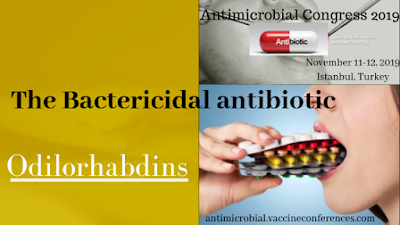
Antimicrobial Drugs : Odilorhabdins Odilorhabdins , or ODLs, a new class of antibiotics which disrupts protein synthesis are produced by symbiotic bacteria Xenorhabdus Nematophilia , found in soil-dwelling nematode worms that colonize insects for food. The bacteria Xenorhabdus Nematophilia actually helps to kill the insect and, importantly, secrete the antibiotic to keep competating the other bacteria away. Till now, these nematode-associated bacteria and the antibiotics they make have been largely understudied. To identify the antibiotic property present in the xenorhabdus bacteria, researchers screened 80 cultured strains of the bacteria & isolated the active compounds showing properties of antibiotics, studied their chemical structures and engineered more potent derivatives. ODLs mainly act on the ribosome, which is the molecular machine of individual cells that makes the proteins it needs to function of bacterial cells. Like many clinically useful antibiotics, ODL...

Novel Nano vaccine to treat skin cancer/melanoma

Image
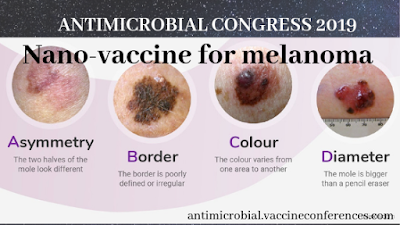
Vaccines & Vaccinology : Novel Nano vaccine for Melanoma Researchers have developed a novel Nano-vaccine for melanoma, the most aggressive type of skin cancer that begins in melanocytes. Their experiments have proven effective in preventing the development of melanoma and in treating primary tumours and metastases that result from melanoma. The focus of the research was on a nanoparticle that serves as the basis for the new vaccine. Melanoma develops in the skin cells, which is called the melanocytes, produce melanin or skin pigment. The fight against skin cancer/melanoma is becoming advanced over the years through a variety of treatment modalities & experiments, such as immunotherapy, radiation therapy & chemotherapy , but the vaccine approach, which has a great effect against various viral diseases, has not materialized yet against cancer. Scientists have shown that it is possible to produce an effective Nano-vaccine against melanoma/skin cancer and to sensitize...

How the mode of delivery plays key role in shaping the child's skin microbiome?

Image
Microbial Virulence : Key roles in shaping the child's skin microbiome.. The maturation of skin microbial communities during childhood is important for the skin of the children and development of the immune system into adulthood, but only a few studies have analyzed the presence of microbiota in young children. Recently investigators in China found that bacterial genera in children were more similar to those of their own mothers than to those of unrelated women. They suggest that the mode of delivery at birth could be an important factor in shaping the child's microbiome. To date, research into the maternal influence on her child's skin microbiome has been mostly limited to a narrow postpartum window in children younger than one year old and fewer studies have explored the maternal relationship with the child's microflora after infancy explained by chinese investigators. Therefore, we expanded the scope of our analysis to include sampling from different bod...

How to block new antibiotic resistance gene???

Image
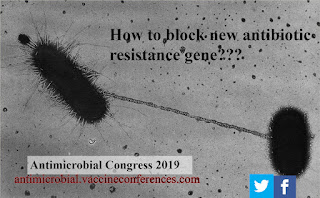
A new antimicrobial-resistance gene, VCC-1, a ß-lactamase gene, has been discovered in benign close relatives of virulent Vibrio cholerae, which causes cholera. Now, researchers have found a way to block the VCC-1 enzyme, which disables that resistance gene. The research is published in the journal Antimicrobial agents & chemotherapy . VCC-1 was first found in Canada, by investigators from the Public Health Agency of Canada, on frozen shrimp that had been imported from India, and sold in a Canadian grocery store. A handful of other ß-lactamase resistance genes have also emerged from India. ß-lactamase genes code for enzymes that can break down ß-lactams, which are a critically important class of antimicrobials . The researchers identified the gene in a non-toxigenic strain of Vibrio cholerae. Since then, VCC-1 has also been found in non-toxigenic V. cholerae off of the German coastline. The danger is that it's a short jump for a gene from non-toxigenic V. cholerae to...

Do early-season hurricanes result in greater transmission of mosquito-borne infectious diseases??

Image
The timing of a hurricane is one of the common primary factors influencing its impact on the spread of mosquito-borne infectious diseases such as West Nile Virus, dengue, chikungunya and Zika etc. Researchers from Georgia State and Arizona State University developed a mathematical model to study the impact of heavy rainfall events (HREs) such as hurricanes on the transmission of vector-borne infectious diseases in temperate areas of the world, including the southern coastal U.S. In the impact of this type of extreme weather event, the mosquito population often booms in the presence of stagnant water. At the same time, the breakdown of public and private health infrastructure can set people at increased risk of infection. The study, which was published in Philosophical Transactions of the Royal Society B, found that the risk of a disease outbreak is highest if the HRE occurs early in the transmission season, or the period of time when mosquitoes are able to pass on the virus to ...